The Autonomous Promise
Between late 2024 and mid-2025, every AI startup with a runway extension to negotiate pivoted to 'autonomous agents'. By mid-2025 the category had settled on a name: agentic AI. The pitch was tidy: give the AI a goal, walk away, let it figure out the steps without the friction of prompting or hand-holding. For about eighteen months it was the dominant marketing posture in enterprise software.
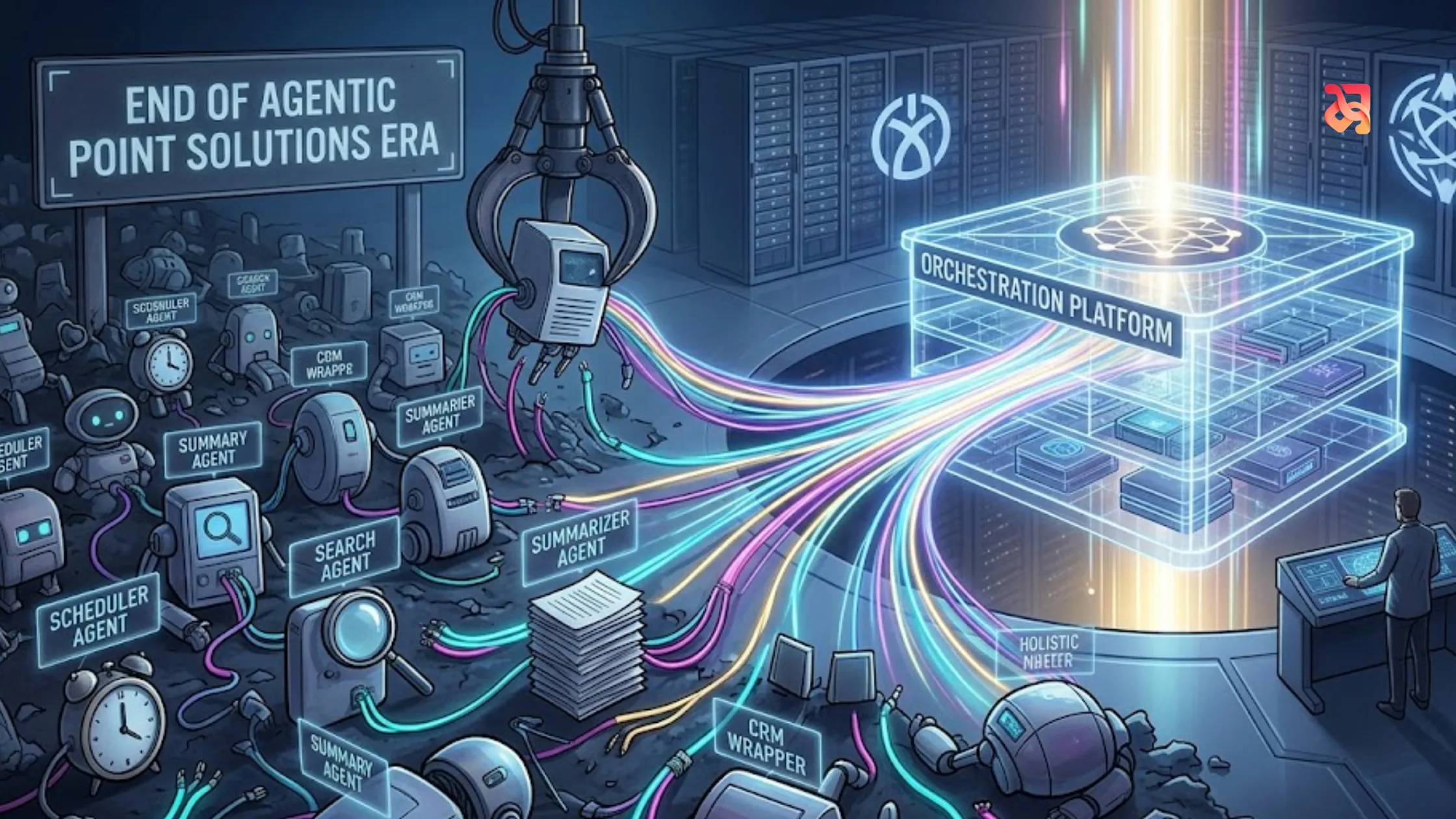
The reality was thinner. Most of these agents were orchestration layers wrapped around a language model, capable of chaining a handful of API calls, sending an email, updating a CRM field, and very little else that crossed a tool boundary. They could not reason about the business behind the boundary. The agent firing a perfectly composed follow-up email at 10am had no idea the recipient filed a support escalation at 9:47, and the agent advancing a deal in pipeline had no view of the budget freeze the customer's CFO had announced on LinkedIn the previous evening. The execution was fast and the action was wrong.
Autonomy without context is just faster mistakes.
“We gave our sales AI full autonomy for three months. It sent 40,000 emails. Our reply rates actually went down because it couldn't tell the difference between a warm lead and someone who just complained to support.”
Why Context Beats Autonomy
The market got the priority backwards. Capital and engineering hours poured into making agents more autonomous while almost nobody worked on making them more aware. Awareness is the harder problem by a wide margin. Chaining API calls is something a competent developer can ship in a week, but understanding that a Tuesday support ticket logged in London should rewrite the priority of a Friday sales follow-up in New York demands a system reading the whole organisation in real time, with a memory of how those two events have related to each other across every previous quarter.
That's what we call organisational omnipotence. Not just access to data, but real-time comprehension of how every signal relates to every other signal. A pipeline change affects email priority. A sentiment shift in support cascades to deal health. A hiring announcement at a prospect company reshapes your outreach strategy. These connections exist in every business. No point solution sees them.
- Autonomous agents optimise single-tool workflows but can't reason across organisational boundaries
- Context requires reading every department, every communication, every entity simultaneously
- Speed of execution is worthless when the action is wrong; intelligence quality is the bottleneck
- The 2024-2025 wave proved that LLM wrappers on isolated tools don't compound into organisational value
What Comes After Autonomy
Symbiotic Intelligence. That's the short answer. The long answer is that the market will split into two tiers. Point solutions will keep shipping autonomous agents that work great in demos and fail in production because they can't see past their own tool boundary. And a small number of companies will build true intelligence architectures that read the whole organisation.
RevSprint is in the second camp. We didn't start with autonomy and try to add context later. We started with context, built an intelligence layer that reads everything, and then added graduated autonomy on top. RIBA (RevSprint Intuitive Business Assistant) earns trust through progressive autonomy: it starts by observing and recommending, your team validates its judgment, and you grant more authority as confidence builds. The AI gets more capable, but only at the pace your organisation is comfortable with.
How is Symbiotic Intelligence different from agentic AI?
Agentic AI gives a language model a goal and lets it plan and execute autonomously, optimising for independence. Symbiotic Intelligence treats AI and humans as structurally interdependent. The AI brings organisational context no human can hold; humans bring the judgement no model can replicate. Context comes first; autonomy is earned over time through measurable accuracy, not granted on day one.
The autonomous agent wave wasn't wrong about the destination. It was wrong about the starting point. You don't start with freedom and add guardrails later. You start with understanding and earn freedom over time. The MIT Initiative on the Digital Economy keeps making the same point: AI value is dominated by context quality, not autonomy depth. To see this on your own stack, get early access.