The Spectrum Nobody Talks About
Most AI products today sit at one of two extremes. At one end, the copilot pattern waits for a prompt, drafts an answer, and hopes the human edits it into something useful. At the other, the agentic-AI pattern hands the model a goal and lets it loose to act on partial context until someone reads the trail of damage and decides whether to keep paying for it. The first is too cautious to be transformative. The second is too cavalier to be trustworthy. Three years of bouncing between these two poles has produced more demos than durable change.
Symbiotic Intelligence is the design nobody is building, and it is not a halfway house between the other two. It is a different shape entirely: an architecture where the human and the AI each carry capabilities the other genuinely lacks, and the system is engineered to be incomplete without both.
So What Is It, Exactly?
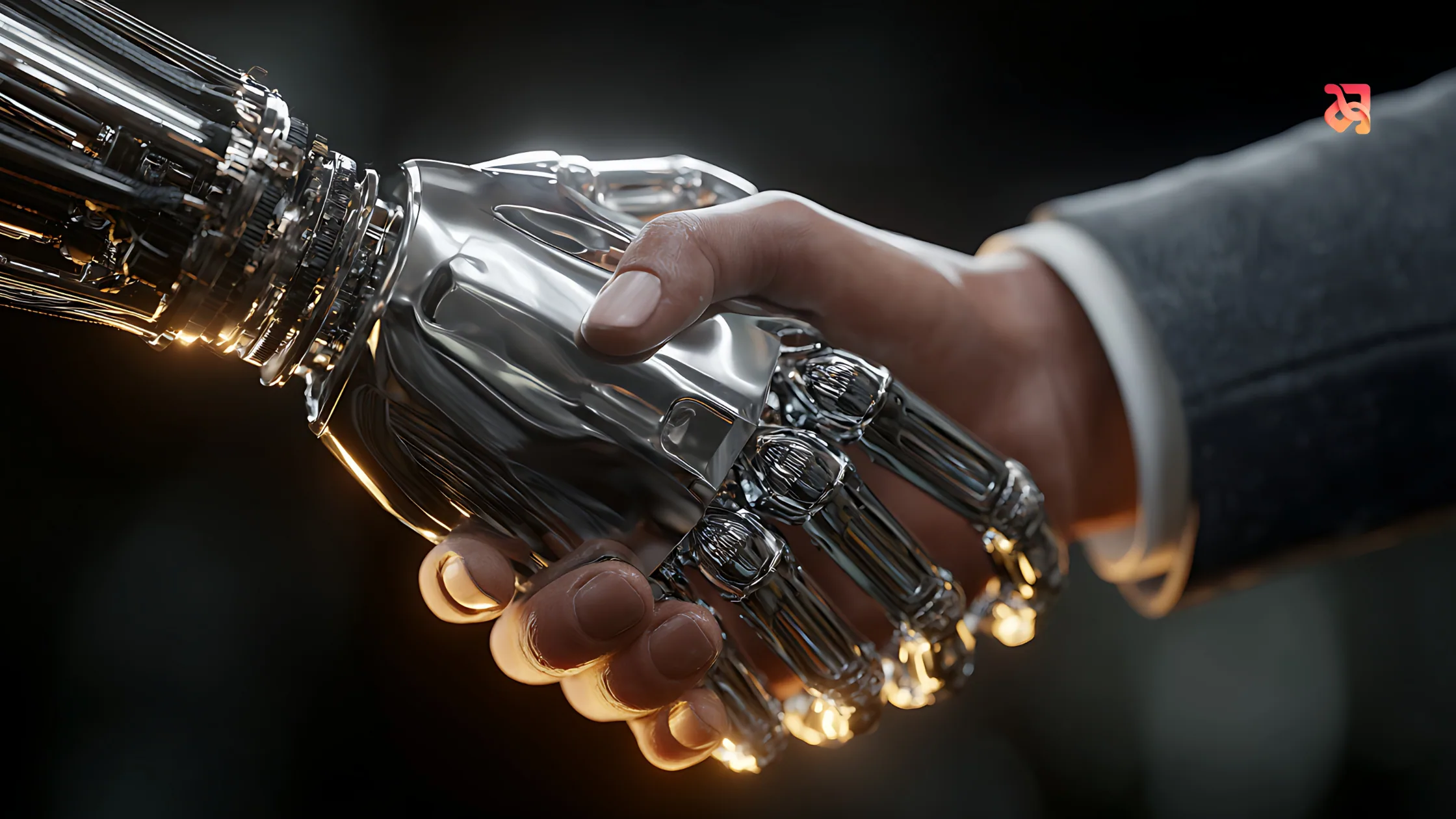
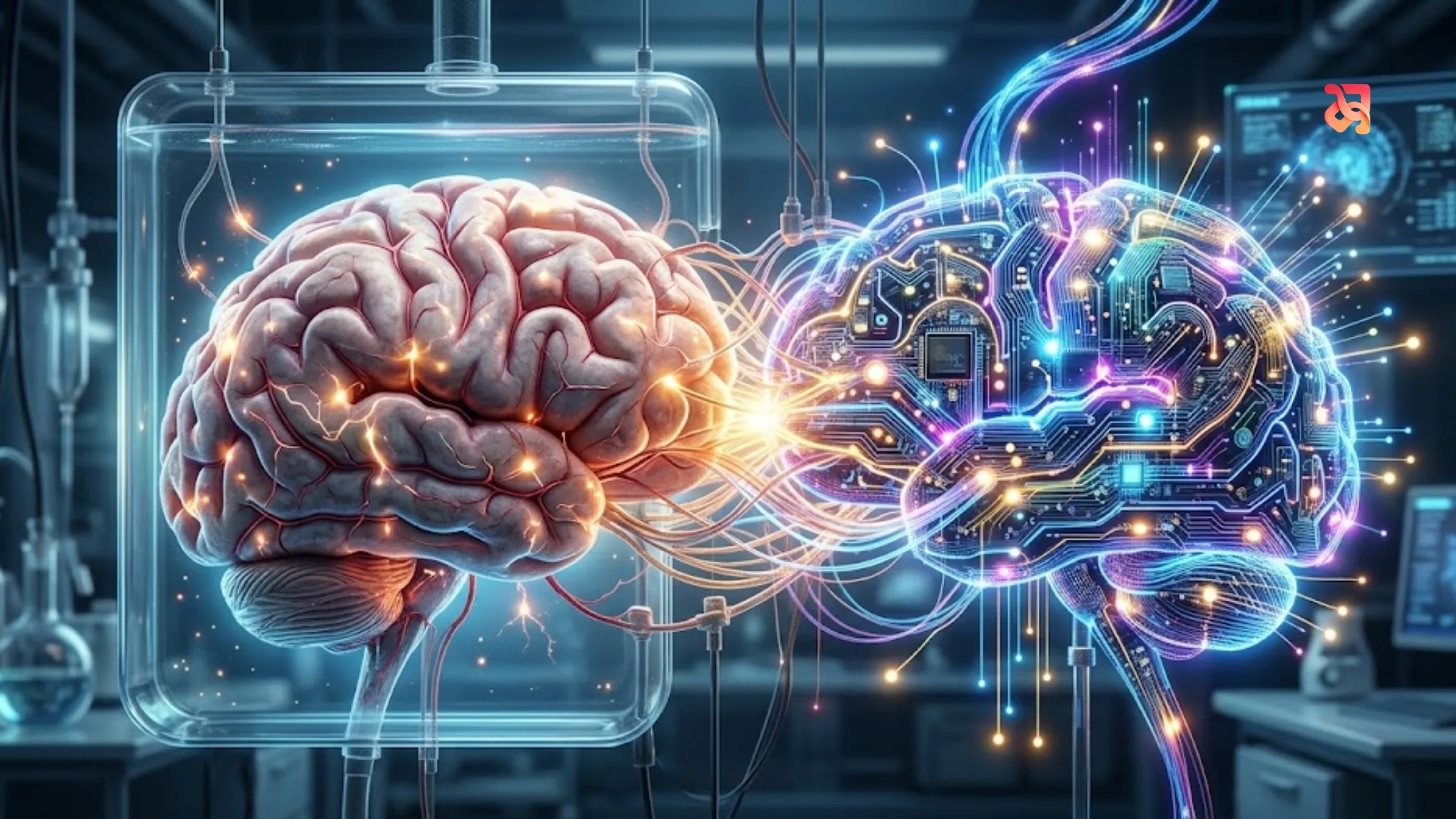
Here is the shortest honest definition. Symbiotic Intelligence is the architecture beneath a Symbiotic Intelligent Operating System: an AI that reads your entire organisation in real time, paired with a human team whose judgement the AI cannot manufacture, wired together so that each one's output becomes the other's input. The AI is not a tool the team picks up and puts down. The team is not a safety net bolted onto the AI. They are two halves of one working system.
The dependence runs in both directions, and that is the whole point:
- The AI gives the team what no human can hold: real-time awareness across every department, channel, and signal at once. One brain, every surface, each person seeing exactly what they need the moment they need it.
- The team gives the AI what no model can derive: judgement. The ear for tension in a client's voice, the read of a room before anything is said out loud, the call on whether a perfectly accurate email should ever be sent.
- Every approval, override, and edit the team makes teaches the AI your playbook, your communication style, your goals, so its next move is sharper than its last.
- Take either half away and the system stops working. The AI without the team acts on context with no judgement. The team without the AI runs blind to two-thirds of what is happening in the business.
“Take either half away and the system stops working.”
What It Looks Like in Motion
Abstractions are easy to nod along to and hard to act on, so here is a single hour inside a business running on Symbiotic Intelligence.
At 9:47 a customer files a support escalation in London: a shipment is late and the tone is sharp. In the old world that ticket sits in a support queue, invisible to everyone else, until it quietly becomes a churn statistic. Here, within the next second, the account's health score drops, the open renewal's close probability is recalculated, and the outbound marketing sequence queued to that customer stops itself. None of this waited for an overnight refresh. The intelligence moved the moment the event did.
At 9:52 the account's sales rep opens her laptop to send the upbeat check-in she drafted yesterday. Before she can, RIBA surfaces what she could not have known: the escalation, the health drop, and the two other accounts on her list showing the same pattern this quarter. The cheerful email would have landed like a slap. She rewrites it in a few words of her own judgement, acknowledges the delay, offers a call, and sends.
That rewrite is the second half of the loop. The system notices she overrode its draft, recognises the situation that prompted it, and files the pattern away: this rep, this kind of account, this kind of breach, handled this way. The next time the pattern appears, the AI's first suggestion is already shaped by her judgement. The human got faster because the AI filtered the noise. The AI got sharper because the human taught it something no training set contains. That, in one hour, is symbiosis.
Why This Has to Be Built, Not Bolted On
Plenty of companies will claim a version of this. Most will mean a weekly meeting where someone reads the AI's output aloud and decides whether to trust it. That is not symbiosis; it is a review step. Real mutual dependence has to be structural, engineered into the architecture rather than added as a process.
It requires an AI carrying genuine organisational omnipotence: reading every department, every communication, every data point in parallel at a volume no human attention can hold. It requires that every human validation feed back as calibration the system keeps, the shape of your industry's cadence, the texture of your team's voice, the patterns that quietly predict outcomes in your market and nowhere else. And it requires the whole thing to run continuously, in real time, the way the organisation itself runs. You cannot assemble that from a chat box and a permissions toggle.
- The AI reads the entire organisation. Humans can't hold that much context, but they don't need to anymore.
- Humans validate edge cases where confidence is low. The AI calibrates from every validation.
- Progressive autonomy means the system earns trust over time, it doesn't demand it on day one.
- Revenue attribution traces AI actions to outcomes, proving value instead of claiming it.
This is what we mean by Symbiotic Intelligence. It’s not a feature. It’s an architectural principle that shapes every decision in the product. MIT Sloan’s research on human-AI collaboration confirms that the highest-performing teams are those where humans and AI are structurally interdependent, not where one replaces the other.
Why 2026 Is the Inflection Point
Categories arrive on a schedule the market only sees in hindsight. The copilot era peaked in 2024: useful, ubiquitous, and fundamentally reactive. The agentic-AI era is peaking now, and it is running into the wall everyone building it can feel, because autonomy is easy but autonomy without context is just faster mistakes. 2026 is the year that ceiling becomes obvious, and the question flips from 'how independent can we make the AI?' to 'how much of the organisation can the AI actually see?'
From here the market splits, and the split compounds. On one side, businesses keep buying point tools, each one bright inside its own window and blind to every other. On the other, a smaller group runs on an intelligence layer that reads the whole organisation and learns from the people inside it. The gap between the two is not fixed. Every month a symbiotic system runs, it absorbs more of its team's judgement and gets harder to catch. A competitor cannot buy that back in a quarter; it is accumulated, not licensed.
The deeper shift is to the shape of work itself. When the AI holds the context, the premium human contribution is no longer knowing where everything is, it is judgement, taste, and the decisions that carry consequence. Teams don't get smaller so much as they get leverage: each person operates with the awareness of an entire operations department behind them.
Why This Category Needs a Name
Categories shape how buyers evaluate. Call RevSprint an 'AI CRM' and people file it next to the database-with-a-chat-box they already know. Call it an 'autonomous agent' and the comparison collapses to a wrapper that sends prospecting emails until a customer complains. Neither comparison is accurate, and both undersell what is actually happening in the architecture.
RevSprint is a Symbiotic Intelligent Operating System. The intelligence is symbiotic because the AI and your team are structurally incomplete without each other. The system spans the organisation rather than one departmental function. And it behaves like an operating system because everything else in your stack ultimately connects through it.
If you want the side-by-side, context scope, learning, cost trajectory, and accountability, we lay it out in Symbiotic Intelligence vs Autonomous AI. The short version: the copilot pattern is reactive and the agentic pattern is autonomous, and Symbiotic Intelligence is neither. The AI reads every department in parallel and surfaces what the team would have missed; the humans validate the edge cases and teach the system judgement through every approval, override, and edit.
Where This Goes
Other companies will move toward this model; the logic is too strong to ignore for long. The only real question is whether you adopt it while it is still a decision or once it is table stakes. We are building what the category looks like in practice.
See why this is a category, not a feature, read the founding argument in our manifesto, or get early access and watch the loop run on your own organisation.