The buyer who already has a CRM and is wondering what comes next usually frames the question wrong. They ask 'what is the best CRM for me in 2026?', as if the answer is another CRM with a smarter chatbot bolted on. But your CRM is not the bottleneck. The bottleneck is that your CRM only sees sales data, and most of the revenue-defining signals in your business are happening in other tools.
Your CRM is the system of record. Its job is to record. The thing it cannot do, and was never asked to do, is read every signal across every department of your organisation in real time, and surface what matters before anyone has to ask.
That is a different job. That job needs an intelligence layer that sits above your CRM, not a replacement that asks you to migrate.
What an intelligence layer actually does
Concretely: an intelligence layer reads from your CRM via OAuth. It also reads from your support platform, your email, your calendar, your billing system, your project board, and any other tool with an API or webhook. It correlates the signals across them in milliseconds, not in tomorrow's data-warehouse refresh.
When a support ticket is escalated in one tool, the deal in another tool that belongs to the same account has its health re-scored before a human has noticed. When a customer's billing fails, the renewal forecast adjusts. When a hire is logged in your ATS, the pipeline rebalances against the new capacity. None of these signals exist inside your CRM in isolation, which is why your CRM has never been able to react to them.
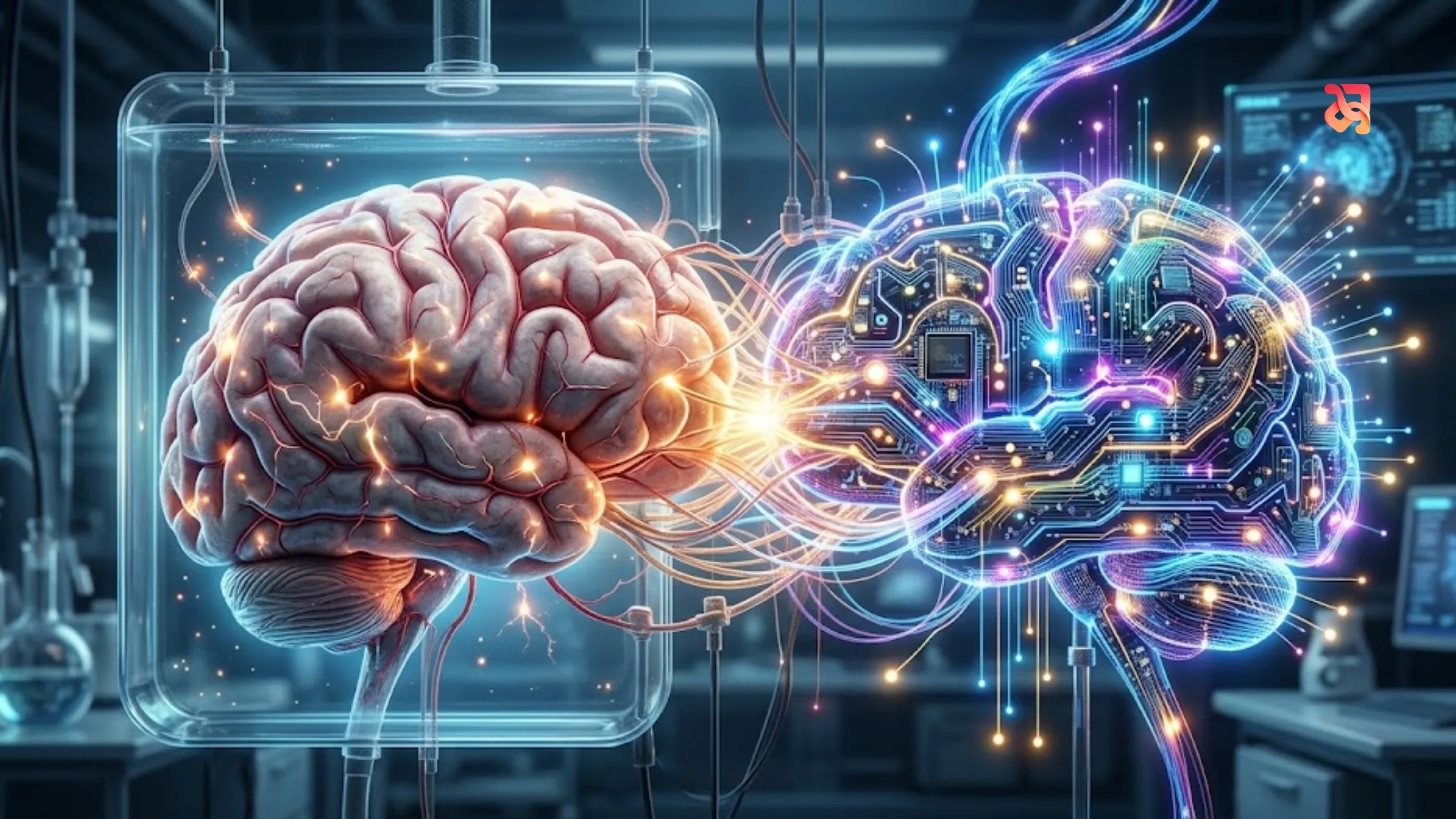
This is the core claim of the Symbiotic Intelligent Operating System category: a real-time event mesh reading across the whole organisation, with the intelligence surfaced beside the human doing the work. Not inside a separate dashboard the human has to remember to check.
Why this is not 'AI inside your CRM'
Every major CRM has shipped an AI feature in the last two years. Those features are useful inside that CRM's data boundary: they can summarise notes, draft replies, score leads against the data the CRM holds. What they cannot do is read what is happening in the tools the CRM does not have access to. An AI assistant inside a sales platform does not see the support escalation. An AI assistant inside the help desk does not see the deal it impacts.
The intelligence layer is the connective tissue that sits above all of those tools simultaneously. The AI features inside individual platforms are not the same shape and were not built for the same job. They are completing in-platform work. The intelligence layer is doing organisation-wide synthesis.
- AI inside a single platform sees that platform's data only. Useful, but bounded.
- An intelligence layer reads across every platform simultaneously. Cross-departmental signals become first-class.
- AI inside a single platform reacts when prompted. An intelligence layer reacts when reality changes.
- AI inside a single platform optimises for a single workflow. An intelligence layer optimises for the organisation's overall coherence.
Why you do not have to replace your CRM
The version of this story that gets it wrong is the one that says you should rip out your CRM. The buyer hears the word 'category' and pattern-matches to 'migration', and the conversation ends before the demo begins. That is the wrong frame.
Your CRM is doing the job it was built for. It is your system of record for sales. Replacing it would be a six-month project that delivers no new intelligence on day one and risks losing your historical pipeline data along the way. The intelligence layer sits above it instead. Live Mode connects via OAuth in about thirty seconds. Your CRM keeps doing its job, and the layer reads from it and from every other tool in parallel.
If, eighteen months later, your team decides they would rather have one platform than seven, Intelligent Migration is there. You do not have to make that decision on day one to get the value on day one.
What changes for the team on day one
Within the first hour of Live Mode activation, RIBA, the named assistant inside RevSprint, starts surfacing cross-departmental context cards beside whichever tool you are working in. A salesperson reviewing a deal sees the support escalation from this morning that the customer success team is handling. The customer success rep sees the contract value the salesperson booked last week. The CFO sees the renewal at risk before the next forecast call.
Nothing is forced. RIBA proposes; the team approves, edits, or overrides. Every action commits to a cryptographically chained ROI Ledger your finance team can audit end-to-end. This is what Progressive Autonomy means in practice: the system earns authority one approval at a time, and the audit trail is verifiable from the first action.
The honest answer to 'what comes after CRM?'
Nothing comes after CRM. The CRM remains. The thing that arrives above it is the intelligence layer. That is the architectural shape of the next decade: a layer that reads every signal across every tool, surfaces what matters in real time, acts with your team rather than for them, and traces every outcome back to revenue.
If your CRM is doing its job and you are still missing the signals that lose customers, the answer is not a different CRM. It is the layer above. See what is Symbiotic Intelligence, and when you are ready, get early access.